
Understanding DApps
A decentralized application (DApp) is a software program that runs on a distributed network, typically a blockchain, rather than relying on a single central authority or server. Instead of being owned and operated by one organization, DApps are powered by smart contracts—self-executing pieces of code that automatically enforce rules and agreements without intermediaries.
This decentralization changes the way applications function. In a traditional app, like PayPal or Uber, everything runs through the company’s servers. The company stores user data, manages payments, and enforces policies. Users must trust that the company is handling data responsibly and fairly. In contrast, a DApp’s logic is baked directly into the blockchain, making its rules transparent and its operation trustless.
For example, in a decentralized lending DApp, borrowers and lenders interact directly through smart contracts. There’s no need for a bank to approve loans, verify documents, or process payments—the blockchain handles it automatically.
Core Characteristics of DApps
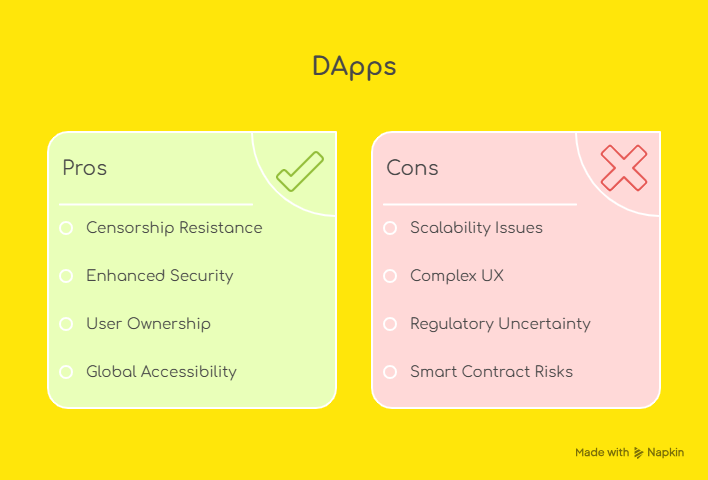
While DApps can take many forms, they usually share certain defining features:
- Decentralization: The backend logic runs on blockchain or peer-to-peer networks, reducing reliance on a single authority. This makes DApps less vulnerable to censorship or single points of failure
- Open Source Code: Many DApps are open source, allowing developers worldwide to audit, verify, and contribute to the code. This transparency builds trust among users.
- Transparency and Trustlessness: Because transactions and rules are recorded on a public blockchain, users don’t have to trust a company—they can verify everything themselves.
- Incentive Structures: Tokens often power DApps, providing utility (e.g., paying fees, governance voting) and incentives for participants to secure and grow the network.
These features make DApps fundamentally different from Web2 applications, aligning more with the principles of Web3, where ownership and control are distributed.
Seamless Legacy System Migration Patterns
The recommended migration approach begins with a pilot project that addresses a low-risk, high-impact area, allowing businesses to test blockchain benefits without substantial disruption. After successful pilots, gradual integration alongside legacy systems provides stability, enabling enterprises to progressively phase out outdated infrastructure without significant operational risks.
The Building Blocks of DApp Development
Building a DApp requires combining blockchain tools with traditional software development. Developers must think differently about architecture since backend processes are distributed instead of centralized. Here are the key components:
- Building a DApp requires combining blockchain tools with traditional software development. Developers must think differently about architecture since backend processes are distributed instead of centralized. Here are the key components:
- Smart Contracts These are the brains of the DApp. Written in languages such as Solidity (for Ethereum) or Rust (for Solana), smart contracts define rules, process transactions, and automate workflows. They are immutable once deployed, so bugs can be costly—auditing is essential.
- Frontend Interface While the backend runs on a blockchain, the user-facing interface can be built with familiar web technologies like React, Angular, or Vue.js. This ensures a smooth experience for end-users, even if the underlying processes are decentralized.
- Wallet Integration DApps don’t use usernames and passwords. Instead, users log in with crypto wallets like MetaMask, Phantom, or Coinbase Wallet. Wallets handle identity, authentication, and transaction approvals.
- Oracles Since blockchains cannot access external data directly, oracles act as bridges. They bring in real-world information (e.g., weather, prices, sports scores) to enable use cases like insurance payouts or decentralized betting.
Benefits and Challenges
Like any innovation, DApps bring opportunities along with obstacles.
Benefits
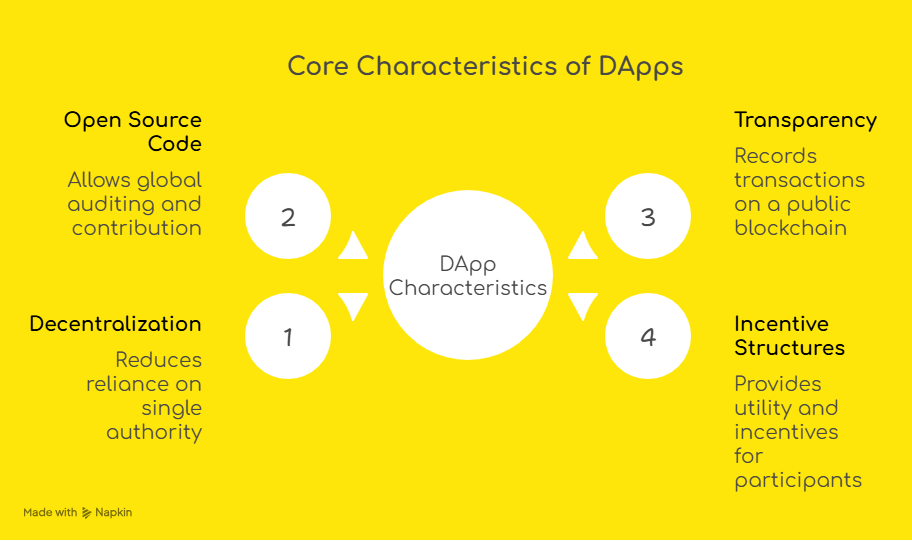
- Censorship Resistance: No single entity can shut down or block a DApp, making it appealing in regions with strict internet controls.
- Enhanced Security: Data stored on blockchains is immutable and distributed, making it much harder to tamper with.
- User Ownership: Unlike Web2 platforms that profit from user data, DApps allow people to own their digital assets, identities, and even have a say in governance through voting tokens.
- Global Accessibility: Anyone with an internet connection and wallet can access DApps, bypassing barriers like geography, banking infrastructure, or credit systems.
Challenges
- Scalability: Popular blockchains often face congestion, leading to high transaction fees and slower speeds. Solutions like Layer 2 scaling (e.g., Arbitrum, Optimism) are emerging, but the problem isn’t fully solved.
- Complex User Experience: New users often struggle with private keys, wallet setups, and gas fees. Until interfaces improve, adoption will remain limited compared to traditional apps.
- Regulatory Uncertainty: Governments are still figuring out how to regulate decentralized systems. Some countries embrace DApps, while others restrict or ban them, creating uncertainty for developers and investors.
- Smart Contract Risks: Bugs or exploits in contracts can lead to massive losses. Unlike traditional apps, fixing deployed code is extremely difficult.
The Future of DApps
The DApp ecosystem is evolving rapidly. As blockchain infrastructure scales and user experiences improve, DApps may transition from niche communities to mainstream tools. We could see decentralized versions of popular apps like Twitter, YouTube, or banking services, offering greater control and fairness to users.
Innovations such as zero-knowledge proofs, cross-chain interoperability, and decentralized identity solutions will further unlock new possibilities. For instance, a future DApp could let you log into any platform with a universal decentralized ID, while keeping your personal data private and secure.
For developers, DApp development represents an exciting frontier where technical creativity can directly challenge traditional business models. For users, it signals a new era of digital sovereignty—where they don’t just use the internet, but own a piece of it.
Final Thoughts
DApps are more than a buzzword—they’re a paradigm shift in how we build and use digital applications. By combining decentralization, transparency, and user empowerment, they pave the way for a more open and equitable digital world. While challenges remain, the momentum behind DApps suggests they will play a central role in shaping the future of Web3.